 Perhaps
the most striking thing about the Jerusalem office of Nefesh B’Nefesh
is its sparkling, corporate look. The quiet hum of phones ringing in
the background, with rows of workers in cubicles pecking away at their
keyboards, lends an aura of a thriving Fortune 500 company.
Perhaps
the most striking thing about the Jerusalem office of Nefesh B’Nefesh
is its sparkling, corporate look. The quiet hum of phones ringing in
the background, with rows of workers in cubicles pecking away at their
keyboards, lends an aura of a thriving Fortune 500 company.
But whereas corporate entities are often weighed down by a cold and
unfeeling atmosphere, this non-profit organization is awash in warmth
and good deeds. Founded with the aim of streamlining the aliyah process
and making it more user friendly, Nefesh B’Nefesh has succeeded far
beyond what anyone could have imagined.
As of 2006, there has been an average of 3,500 North American olim each
year. And in September 2008, the Jewish Agency signed an agreement with
Nefesh B’Nefesh essentially ceding it control over aliyah from North
America—the first time in the history of the State of Israel that a
private organization has been so recognized.
One of the people behind this burgeoning aliyah revolution is Rabbi
Yehoshua Fass, whose energy and force of personality have broken down
bureaucratic barriers once thought to be insurmountable.
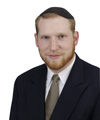
Rabbi Fass, who received semichah from Yeshiva University, served as
associate rabbi at Florida’s Boca Raton Synagogue. After a relative of
his was murdered in a terrorist attack in Israel, he was inspired to
found Nefesh B’Nefesh, together with businessman and entrepreneur Tony
Gelbart, in 2001. Rabbi Fass now lives in Ramat Beit Shemesh with his
wife and six children (three of whom are native-born Israelis). Jewish
Action journalist Michael Freund spent time with Rabbi Fass discussing
the state of aliyah today.
Jewish Action: How is the aliyah business these days?
Rabbi Fass: North American aliyah is on the rise. What we’ve
achieved in such a short amount of time, in terms of putting aliyah
back on the Israeli government’s agenda and gaining such widespread
respect and recognition for Nefesh B’Nefesh, has far exceeded our
expectations. It is clear now that the [Israeli] government values the
public-private initiative in the field of aliyah. It has an
appreciation for the tremendous inroads that we have made and for the
infusion of spirit and optimism that North American aliyah brings to
the country.
JA: And how is that translated into numbers?
RF: There has been steady growth in aliyah from North America.
It is not an exponential increase yet, but we have seen a jump of 10 to
15 percent in the number of olim from the United States, bringing us
closer to a tipping point, which I believe will happen very soon. To be
frank, I am surprised that there aren’t more people—especially among
the Jewish Action readership—saying, “OK, we pray for it, we believe in
it, we’ve longed for it for over 2,000 years, so we are going to make
aliyah.” The fact is that there are fewer excuses now. While there are
still challenges to living in Israel, in so many ways the playing field
has been leveled and, by all logic, there should be far more waves of
people moving.
JA: Why isn’t there more religious aliyah? Why aren’t more observant Jews motivated to make the move?
RF: Since the establishment of the State of Israel, many of our
leaders have missed out on major windows of opportunity to express a
passion for and connection to Israel, and have been reluctant to issue
unbridled declarations that Jews should make aliyah. And I think people
have used that as a way out, as an excuse for not moving. Because it
isn’t always easy, and there are challenges. The question is how we
react to these challenges—by viewing them as insurmountable and staying
where we are or by planning and strategizing to prepare for them. Our
priorities have to be re-evaluated.
Today,
negative perceptions have been shattered by the thousands of
successful, productive North Americans who have planted their roots in
Israel and are building their homes and families here.
We are
now at a crossroads, where aliyah has become mainstream and [olim have]
a firm, solid support system from both Nefesh B’Nefesh and a network of
successful, integrated North American olim. The time is now to become
proactive and to encourage North American Jews to build their lives in
Israel.
JA: Has the shift to the right within Orthodoxy in America been a factor?
RF: This shift has not been supportive of aliyah and has not
included aliyah in its agenda. I think that the mitzvah of yishuv
ha’Aretz—settling the Land of Israel—should become a top priority.
There is something wrong with our religious values if it isn’t. Rabbis
should be encouraging their students and congregations to fulfill this
mitzvah.
JA: You mentioned that a tipping point, in terms of North American aliyah, is near. Why do you believe that to be the case?
RF: It is going to happen because there is an aliyah revolution
around the corner. There is a change in [the] mindset [of many]
regarding aliyah; people are starting to see life in Israel in a very
different way. A few years ago, when we conducted research on North
American Jews’ impressions of aliyah, we discovered that the feeling
was not positive—many people did not view aliyah as a celebratory move.
Few people chose to make aliyah and, of those who did, many returned a
year or so later, having tried and failed. Today, largely through the
efforts of Nefesh B’Nefesh, negative perceptions have been shattered by
the thousands of successful, productive North Americans who have
planted their roots in Israel and are building their homes and families
here.
Communities have started to celebrate and take pride in those who
choose to make aliyah and to view them as fulfilling our collective
dream. The key [to creating] this radical change in attitude is
ensuring that olim are successful in their aliyah. [Nefesh B’Nefesh
does this] by streamlining the process, by helping olim navigate the
system and by providing them with guidance, resources and support. As a
result, when the communities “back home” now hear about the aliyah
experience, they view it through a positive lens—a lens of success and
fulfillment. This has a huge impact on communities.
JA: How do you know that to be true?
RF: We see it. In the last two years, we have seen an increased
number of “completions of families,” as parents and siblings of olim
join them in Israel as olim themselves. This phenomenon is a clear sign
that the initial immigrants are happy and that the message has
reverberated back to their families. In a few months, Nefesh B’Nefesh
will reach the mark of having helped 18,000 people make aliyah—18,000
successful, satisfied and integrated people. [If you include] the
number of people we currently have in our pipeline, we will soon hit
25,000. Think about that for a second. Even the most unsocial person
has a radius of at least ten acquaintances, so with 25,000 happy and
well-adjusted immigrants from North America, at least 250,000 people
back home will be exposed to a positive aliyah experience through them.
That is when we will reach our tipping point, and we’re almost there.
JA: But aliyah from the United States is still in the low four
figures. Do you think it will hit five figures? Is that too much to
hope for?
RF: It’s not too much to hope for. It all depends on how fast we
get to the tipping point. If aliyah continues at its natural growth
rate, then I see it rising to 4,000 people per year, then 5,000 and
from there it will jump immediately past 7,000. Of course, if there is,
God forbid, some major crisis of some sort, then the numbers could go
even higher.
JA: And yet, most of the current olim are from the Religious Zionist community. What about non-Orthodox Jews?
RF: The Birthright program is having a significant impact [on the
Jewish community] and it has created a massive interest in aliyah among
secular Jewish singles, many of whom are now looking for a Jewish
identity and [to live a] Jewish life. We have helped approximately
1,000 Birthright graduates make aliyah in the last few years. I also
think the Conservative movement is putting more emphasis on aliyah and
is trying to raise greater aliyah consciousness.
JA: What are the easiest professions in Israel for new olim?
RF: It is easiest for Anglo olim to find employment in the
hi-tech sector, which includes programmers, salespeople, technical
writers and marketing writers. In addition, due to the shortage of
physicians in Israel, there is a great demand for American doctors,
particularly anesthesiologists, surgeons, pediatricians, internists and
family doctors. In order to help alleviate this shortage, Nefesh
B’Nefesh and the Legacy Heritage Foundation have created a fellowship
to encourage North American and British physicians to move to Israel
and to practice here.
JA: Do medical professionals in particular face unique challenges in moving to Israel?
RF: As would be expected of any medical professional immigrating
to a new country, doctors who move to Israel are required to get
re-licensed. However, the licensing process for physicians, similar to
that of psychologists, does not include an exam. In contrast, dentists,
nurses and optometrists must take a difficult board exam, and,
according to a recent announcement by the Israeli Ministry of Health,
physical therapists, occupational therapists, speech therapists and
dieticians will also be required to do so, in addition to completing an
internship (known in Hebrew as “Staj”).
JA: What has been the secret of Nefesh B’Nefesh’s success?
RF: In the past, when people made aliyah they had no address to
turn to when issues arose. They were simply overwhelmed. But Nefesh
B’Nefesh has changed that. People now have a [place to go for]
assistance, guidance and often even just emotional support; this has
had a dramatic effect. Olim draw their support from our staff, which is
largely comprised of people who are olim themselves—North Americans
helping North Americans. Having been through the process themselves,
the Nefesh B’Nefesh staff understand what olim are going through,
identify with their experiences and are sensitive to their needs. We
have also succeeded in cutting out much of the frustrating bureaucratic
red tape that has always been part of the aliyah process. We are
proactive and address potential issues before they arise so that the
process has become infinitely smoother. In the post-aliyah stage, we
check on the olim regularly to find out how they are adjusting to their
new lives. We help them find jobs and provide them with continued
guidance and support. Our system seems to be working: since January of
this year, 10,000 people have downloaded aliyah applications from our
web site. These numbers are off the charts compared to everything that
we’ve done in the past.
JA: What can people in the United States who care about aliyah do to help the cause?
RF: Well, they can make aliyah [themselves], of course. They can
also start a chug aliyah in their homes, gathering like-minded
individuals together to discuss and create a garin (a group of people
who decide to make aliyah together) within the community. Also, they
can lobby their shuls to start aliyah programs or activities such as a
Hebrew ulpan, or they can support aliyah financially. There are many
projects that can and should be undertaken in order to raise people’s
consciousness regarding Israel, Zionism and aliyah.
JA: What does the future hold for Nefesh B’Nefesh?
RF: I view our organization as still being in its infancy. We
have achieved a tremendous amount in the past six years but the work
that lies ahead is still great. We are continually thinking of creative
ways to improve the aliyah and absorption processes and to further pave
the way for tens of thousands. I believe that we will see inspiring and
impressive strides in North American aliyah in the very near future.
Mr. Freund served as an aide in the Israeli Prime Minister’s Office
to former premier Binyamin Netanyahu. He is currently chairman of
Shavei Israel (www.shavei.org), a Jerusalem-based group that assists
“lost Jews” seeking to return to the Jewish people.


